Vote for future
Spoiler add-ons.
These gliders are under research consideration for future THGF packages. Cast your vote to signal demand — grouped by manufacturer, ordered by votes.
Sign in to vote · one vote per glider per account
 A-I-R5 gliders
A-I-R5 gliders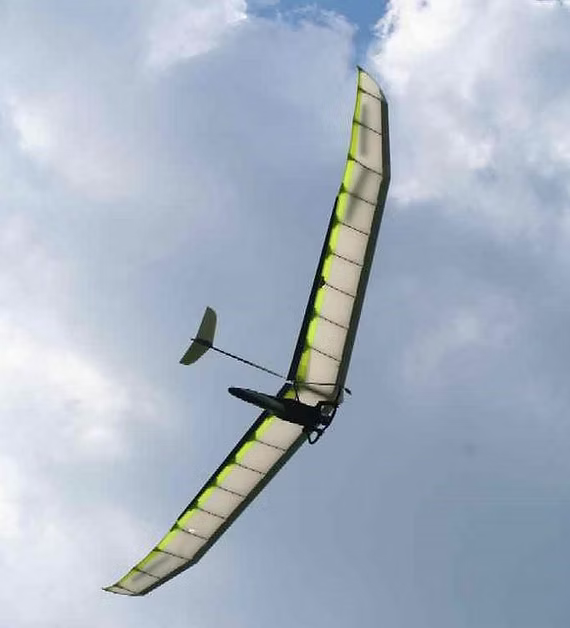
This is the glider for the serious recreational pilot. Sets up in half the time of a high performance flexwing and weighs less than the VR. It gives up very little to the VR's performance and provides all the convenience you could hope for. Technora sail is an available option. The glider has the same wing platform as the VR sans the winglets, smaller flaps, and an all carbon tail stinger. A different construction allows for fast set-up and the glider weights just 84 lbs!!! For 2011, the new VQ has a reworked sail/flap junction and stiffened flaps that perfect the handling. There is also a Technora Sail Option the lightens the glider a further 3-4 lbs improves glide and appearance! Glide performance is nearly identical to the VR up through the mid-40MPH range and minimum sink rate is at least as good.
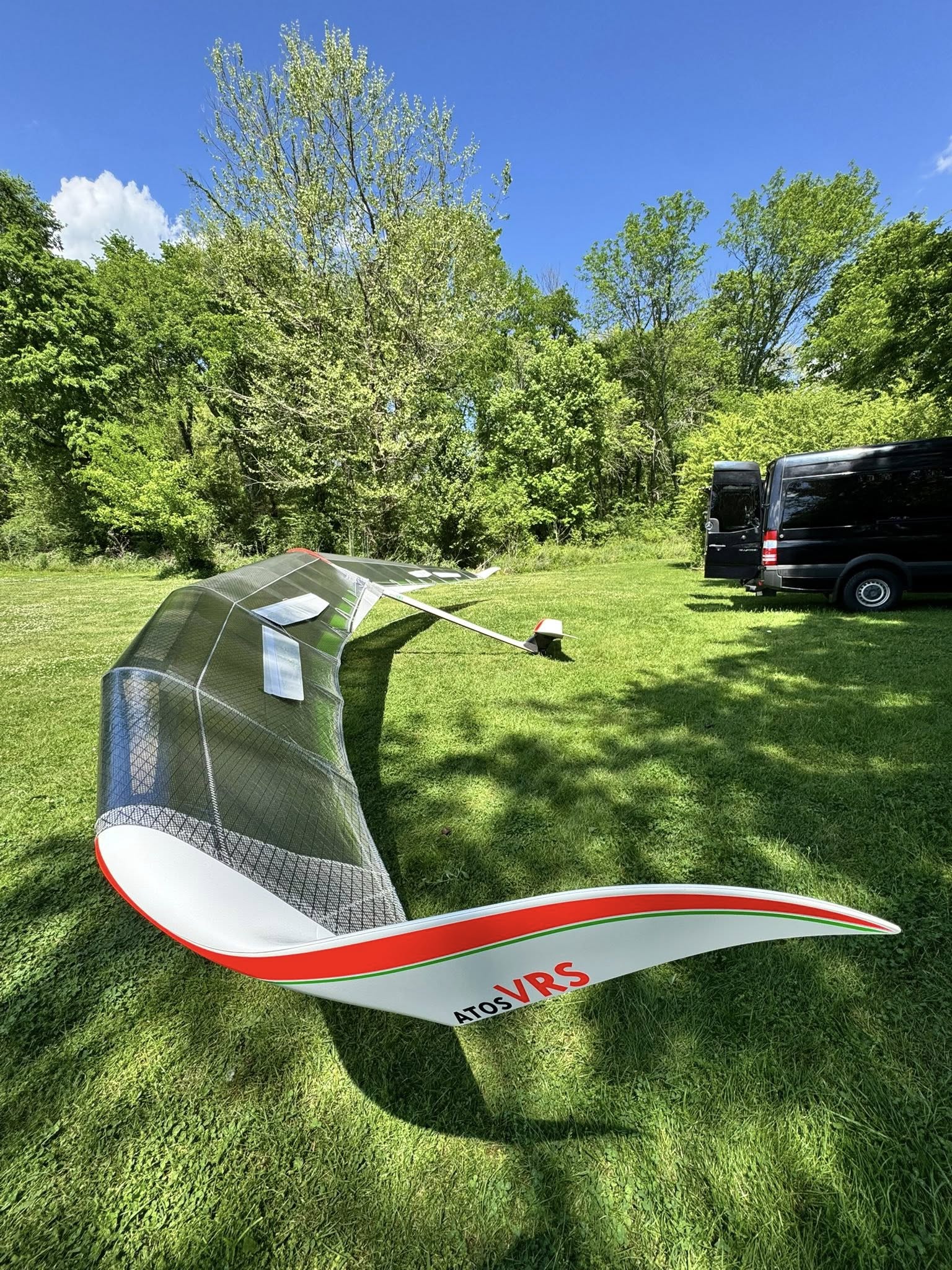
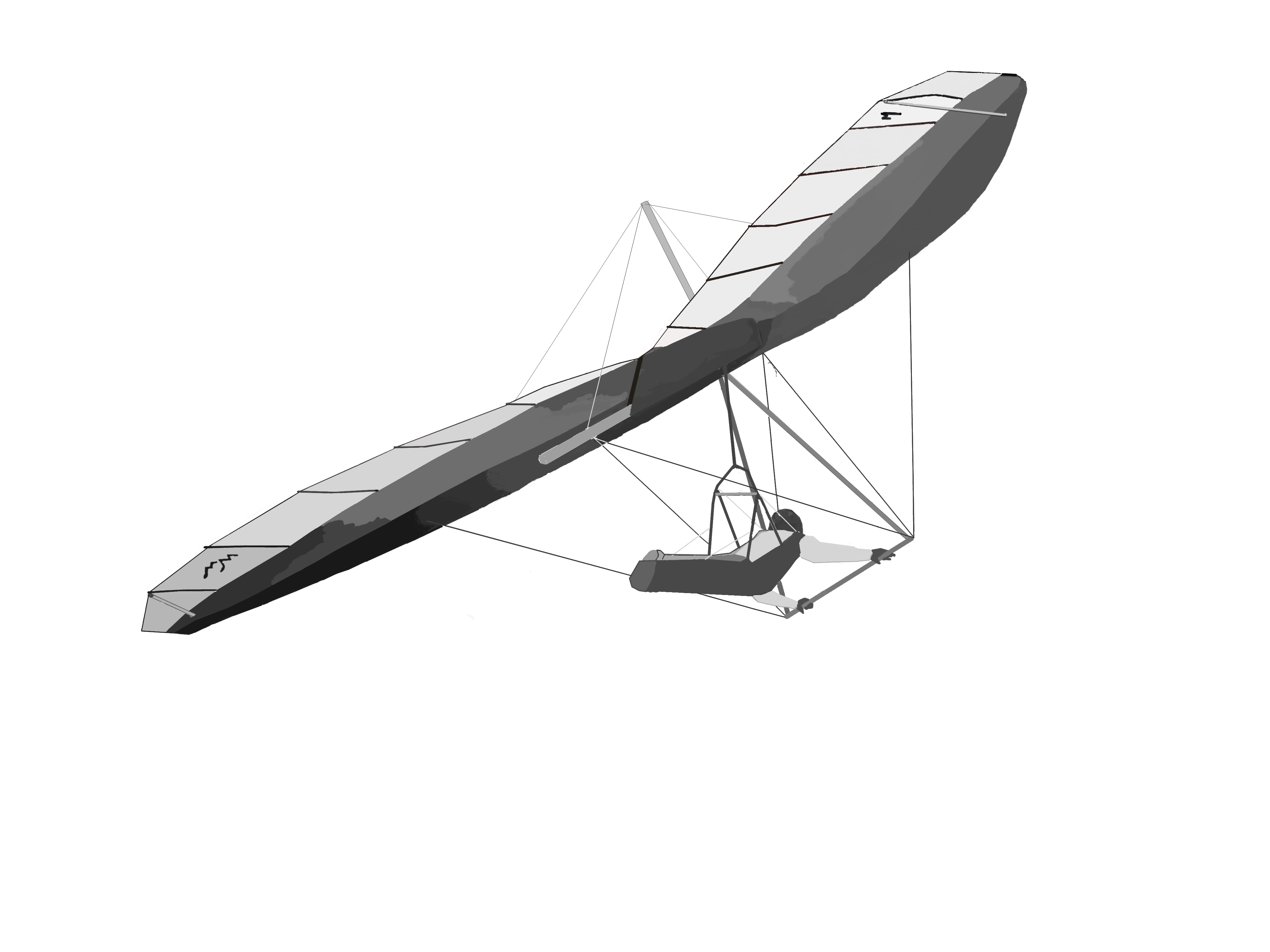
The ATOS VR has a sink rate very near that of the VX despite a narrower chord. It's best glide is comparable to the VX... but the big difference is it's glide ratio at higher speeds and it's sport-car handling. The narrow chord, high aspect ratio, full-span flaps, and moveable tail give the ATOS VR the highest design-set of features available in the sport today. Primary competition ATOS. Span 13.8m, area 14.7m², AR 13.3, glide ~20:1, weight 44kg. Pilot 90–182 kg. Won FAI Class 5 World Championships 2014 (Tim Grabowski), 2016 (Grabowski), 2023 (Anton Raumauf, Austria).
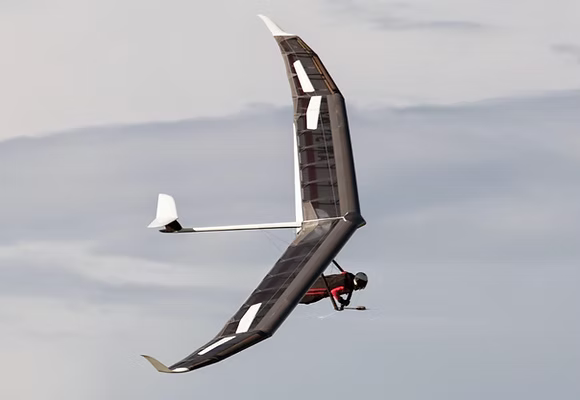
The VR+ is newly offered in 2015. The outer wing now has the VRS geometry. It also has a new full carbon adjustable tail. This allows for less sweep and twist resulsting in a better sink rate and lower stall speed. This wing has very exciting advancements and will be the one to watch in 2015!

The most agile, and arguably most attractive, glider in the line with the same performace profile as the race-ready VR. The ATOS VR-S is designed for lighter weight pilots with the benefit of the greatest agility for coring high-pressure summer thermals.
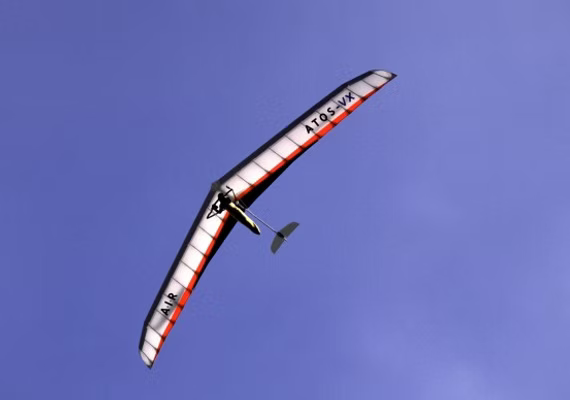
A higher performing model also certified to carry tandem loads. The VX excells in light-air flying and mates with the Silent motorized Pod for near sail-plane performance and self-launch freedom. The ATOS VX is a larger span - 46', higher performance glider certified at 550 lbs. demonstrating the capability of tandem loads. Minimum pilot takeoff weight of 165# makes for light air soaring unmatched by any other hangglider.
 Aeros1 glider
Aeros1 glider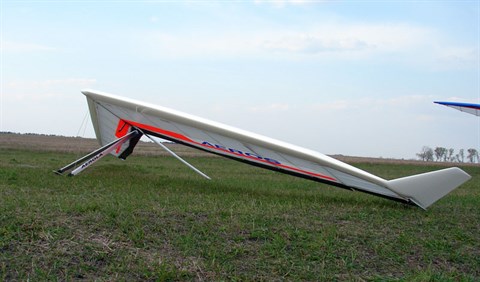
Evolution of the Stalker with higher aspect ratio, enlarged aileron and SPADD surfaces. Emphasises safety, performance, and towing comfort.
 Flight Design3 gliders
Flight Design3 gliders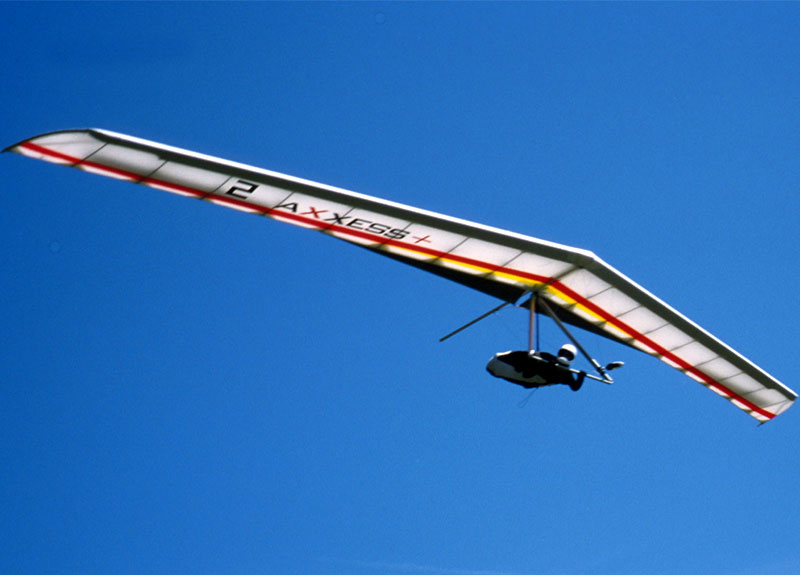
he Axxess was intended as a high-performance rigid-wing hang glider for competition use. The early production versions had flaps but these were later deleted, as they offered no performance advantage.[1] The wing structure includes a carbon D-spar, with the wing covered in Dacron sailcloth. The foldable design of the ribs allow for a small packing size. Its 13.2 m (43.3 ft) span wing has a nose angle of 165° and the aspect ratio is 12.7:1, with flaps retracted the aspect ratio changed to 13.6:1. The maximum takeoff weight range is 90 to 165 kg (198 to 364 lb)
The Flight Design Axxess is a German high-wing, single-place, rigid-wing hang glider designed for high-performance competition flying.[1][3] It was produced in 2002 and is no longer in production, as the manufacturer has shifted focus to light-sport aircraft.[1][6][2] Key specifications include a wingspan of 13.1 m, wing areas of 12.6 m² (size 1) or 13.5 m² (size 2), aspect ratios of 13.6 (size 1) or 12.7 (size 2), an empty weight of 39 kg, and support for pilot weights of 90 to 115 kg (198 to 254 lb) with a maximum takeoff weight of 154 kg (340 lb).[1][3] It packs to a length of 6.3 m for transport
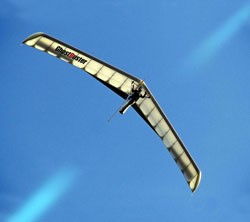
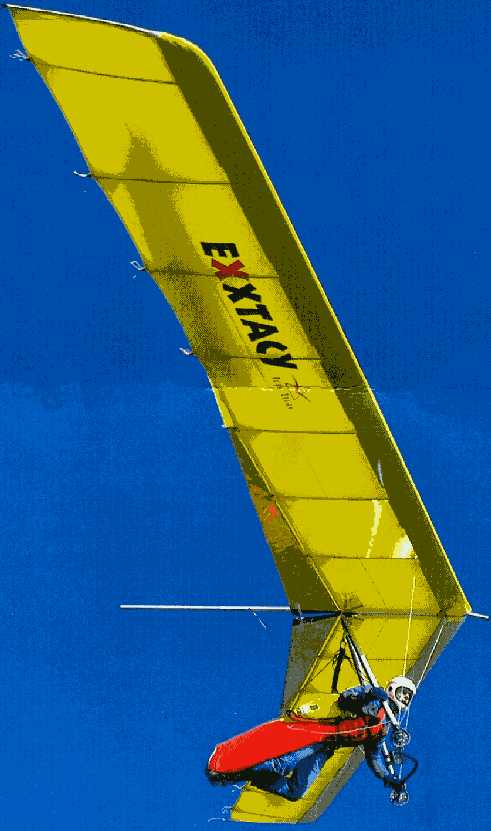
Successor to Exxtacy, predecessor to Axxess. Similar to Exxtacy and Atos. Span 13m, glide 20:1.
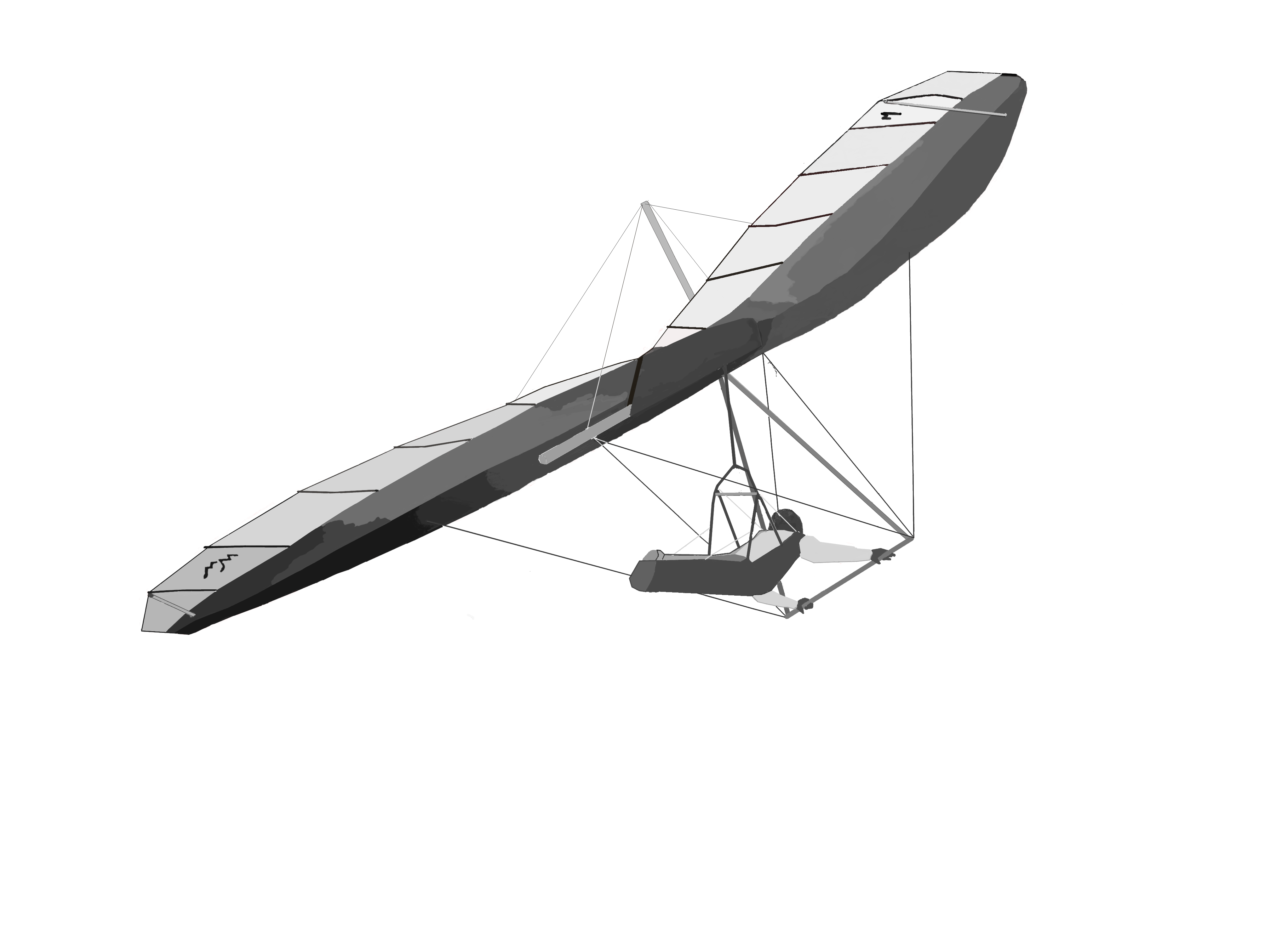 Guggenmos2 gliders
Guggenmos2 gliders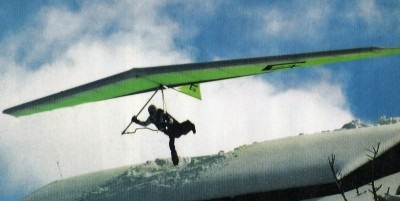
The E 7 by Joe Guggenmos (ex World HG Champ) at first glance looks similar to the Exxtacy, however it has a tapered wing (both chord and D-Cell cross section) using separate right and left molds. It has control bar activated spoilers, is 152 sq.ft, 10.43 aspect, 39ft span, spoilers and flaps fold up with the glider, 18.5ft (5.6m) long in the bag and weighs just 68 lbs (31 kg). Joe claims a glide of over 17:1, a sink rate of 137 ft/min and handling better than other rigids. The spoilers are mounted at the high point of the airfoil, pre empting any nose up movement when they are deployed. Carbon fibre rigid wing. Spoilers on high point of airfoil acting as asymmetric speed brakes/inverted split flaps. Two-piece assembly. Distributed by Pendulum Aerosports in North America.
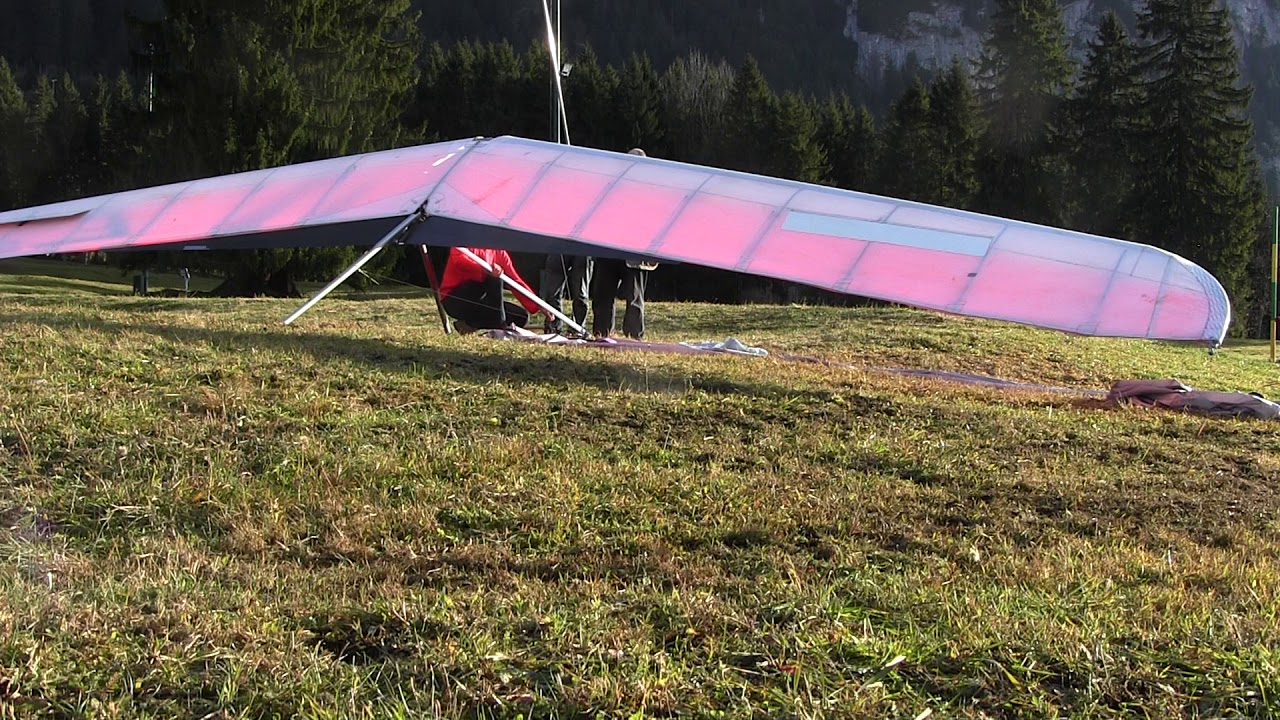
Effective Sophisticated Camber. Hybrid rigid wing with under-cambered aft inboard ribs. Elliptical tips for improved sink rate. Repositioned rear spoilers. Lighter than Exxtacy. The 2000 Guggenmos ESC glider for Advanced pilots is very quick to rig and can be flat rigged. The twist, washout is manufactured into the leading edges combined with fixed tips and slighty more sweep then other rigids makes for a very stable platform. The glider has the more usual spoilers for roll and a closed loop control system with no nose wires. The flaps split in two, length wise for derigging that enables them to be large, yet not impact on the folding up of the wing. The rib trailing edge junction is quick to attatch as are the fixed tips. Very good roll control, quick to roll in and a little slower to roll out, pitch is light but positive. The landing is no harder then a sky floater. A very easy glider to fly. The ESC XT for Advanced pilots appeared in 2006
 Icaro 20003 gliders
Icaro 20003 gliders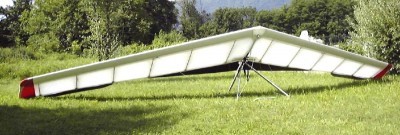
An Exxtacy with ailerons instead of spoilers. DHV tests positive. Never entered production — Icaro focused on distributing Atos.
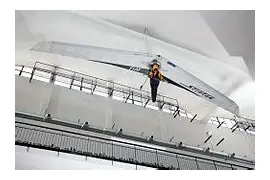
The Stratos was a collaborative project between A-I-R GmbH and Icaro 2000. Following the launch of this model both companies pursued their own directions on rigid wing design, although they continued to collaborate on parts manufacture. The aircraft is made from tubing, with the wing covered in Dacron sailcloth. The Stratos was built in two sizes to accommodate differing pilot weights, "L" and "M" Large Stratos. Span 13.25m, area 13.8m², AR 11.9. Pilot 80–110 kg. Optional V-tail. Won 2004 FAI Class 5 World Championship.
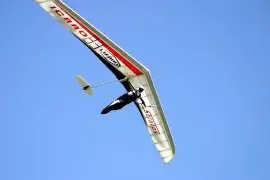
Italian rigid-wing hang glider co-developed by Icaro 2000 and A-I-R GmbH. ATOS-derived frame with Dacron sail. Span 11.8m, area 11.8m², AR 12.7. Pilot 60–90 kg. Optional V-tail for improved pitch stability.
 La Mouette1 glider
La Mouette1 glider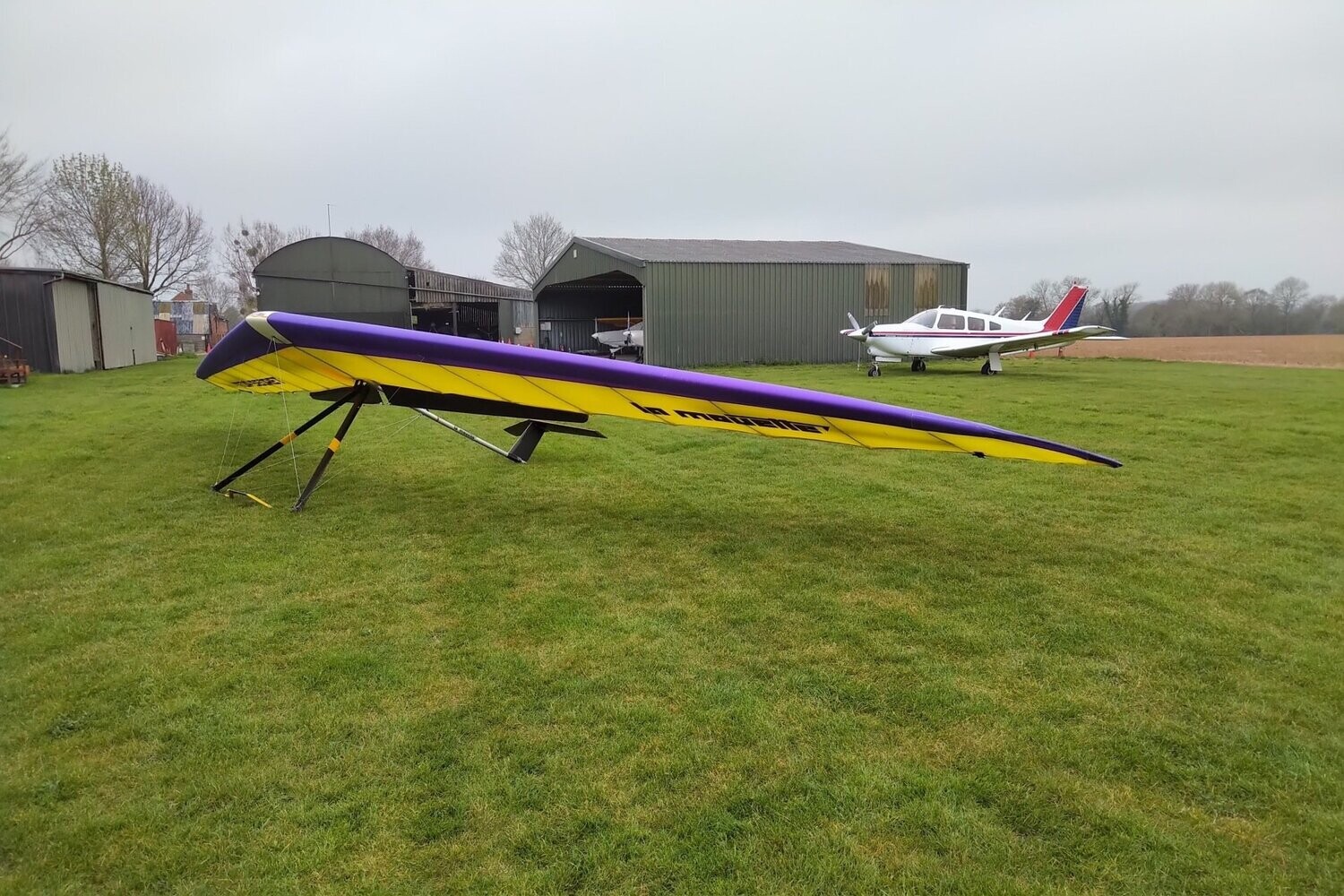
Spoilerons closer to trailing edge, larger flaps than Exxtacy/Pegasus. Span 12.9m, area 14m², weight 35kg, sink 0.7m/s. Tsunami is its successor.
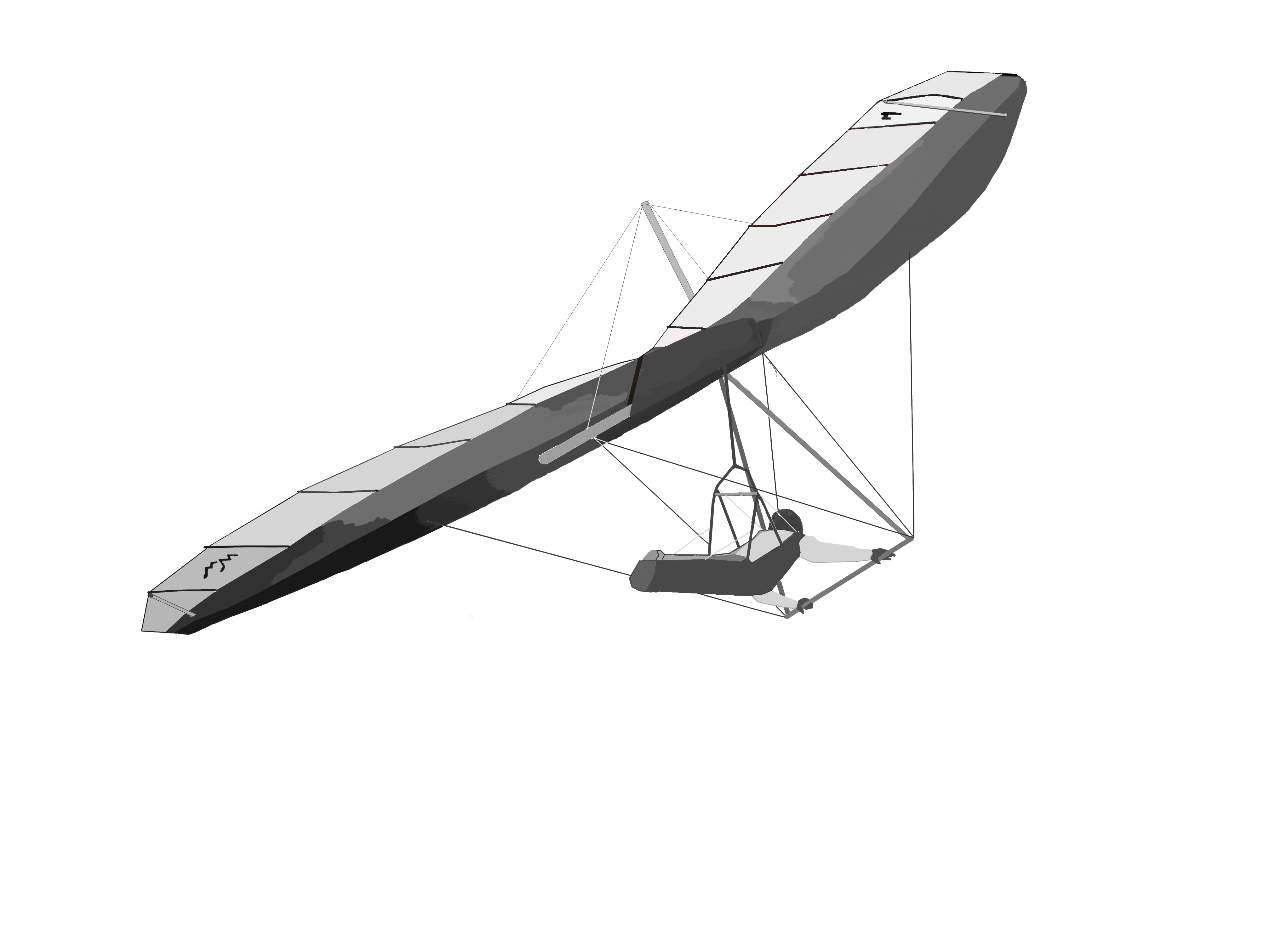 Lutz Drachenbau2 gliders
Lutz Drachenbau2 gliders
Predecessor to Pegasus. Designed 1991. Span 12m, area 15m², AR 9.6, glide ~17:1. Spoilers via control bar side wires similar to conventional hang glider.
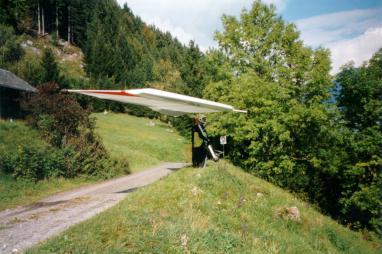
Follow-up to Experience. Span 11m, area 15.2m², glide 16:1, weight <40kg. Spoilerons via cable, pitch by weight-shift. Used at 1994 European Championship.
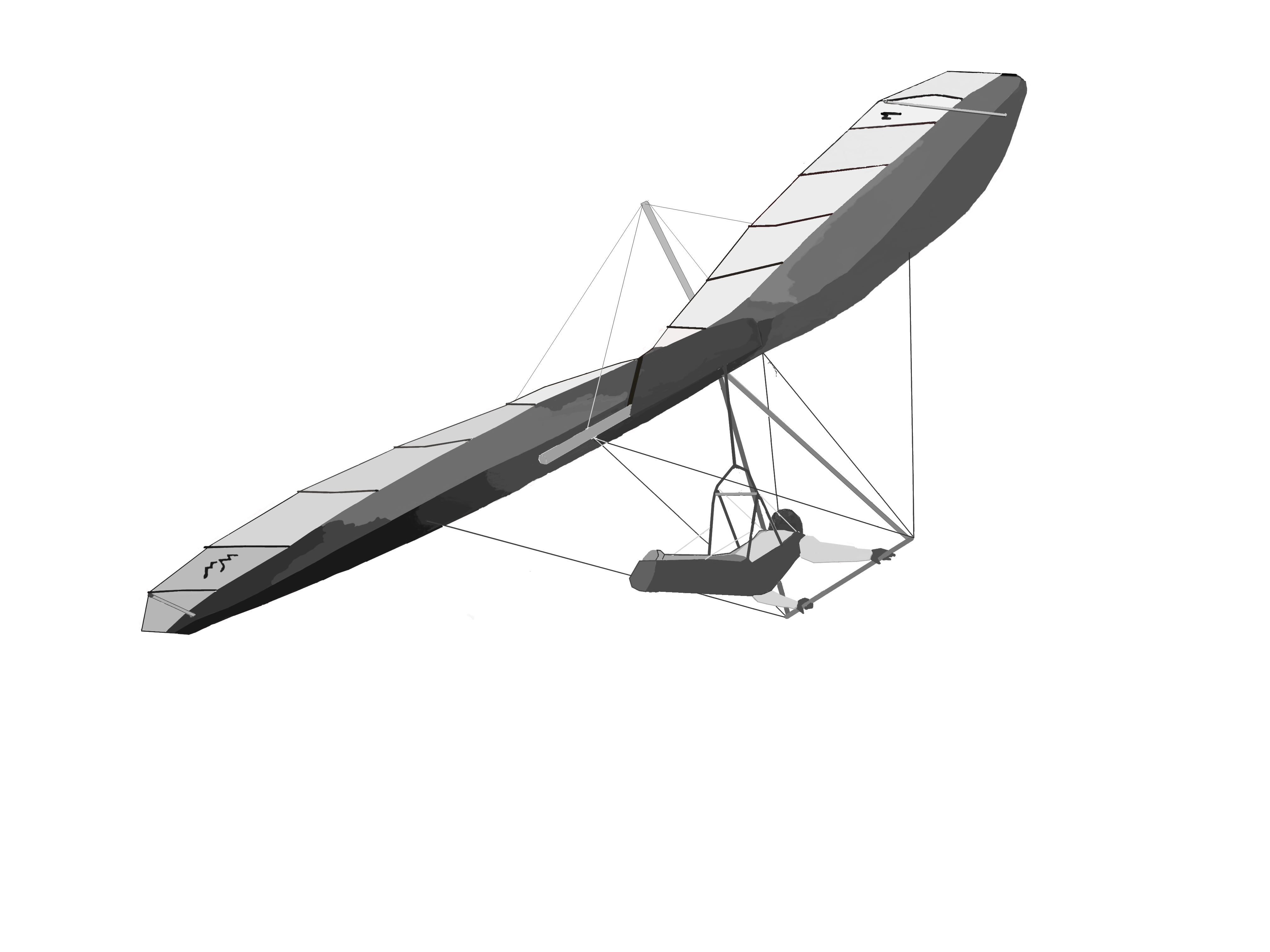 Manta3 gliders
Manta3 gliders
Most popular rigid-wing of its era. Won 1981 World Championships and 1979 US Nationals. Standard aluminum and Dacron. Folded smaller than a topless glider The Fledgling uses two identical spars that carry equal loads. The rear spar is in a streamlined pocket. The Fledgling is completely self-launchable and folds down to a Rogallo size package. The rudders that aid stability and turning are actuated by control cables attached to the swing seat, harness or by twist grip, supine.
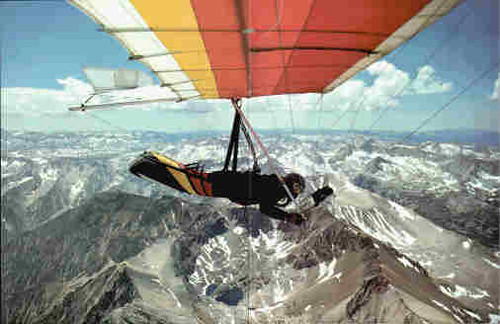
Most popular rigid-wing of its era. Won 1981 World Championships and 1979 US Nationals. Standard aluminium and Dacron. Folded smaller than a topless glider.
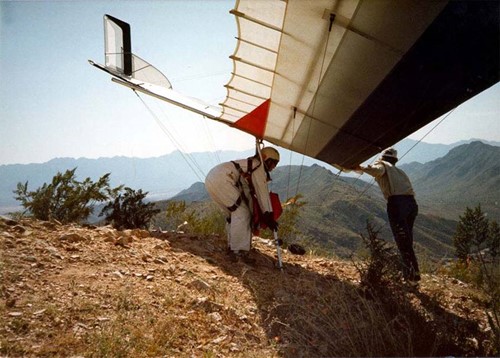
Here is snap shot of the “improvements” the Voyager IIB incorporated over the Fledgling. They are substantial, involving increased airframe strength (larger diameter compression members/tubes and double drag wires/cables), smooth leading edge treatment (Mylar), flush wing rib pockets, internal rigging attachments, increased double surface, center section and nose mylar fairings, totally different airfoils (much less reflex but spread over whole span), less wing twist, much less dihedral, added non-movable tip fence for improved sink rate and L/D, uncoated 1 by 19 brace wire/cables for reduce drag and increased load capability (I performed drag measurements on different types/diameters of cable), utilized “cable base tube” for drag reduction with “sliders” for tip rudder control, “screw expanding king-post” which greatly increased airframe rigidity. The handling was superb which reduced pilot fatigue, also did lots of “on top landings
 Matt Kollman1 glider
Matt Kollman1 glider
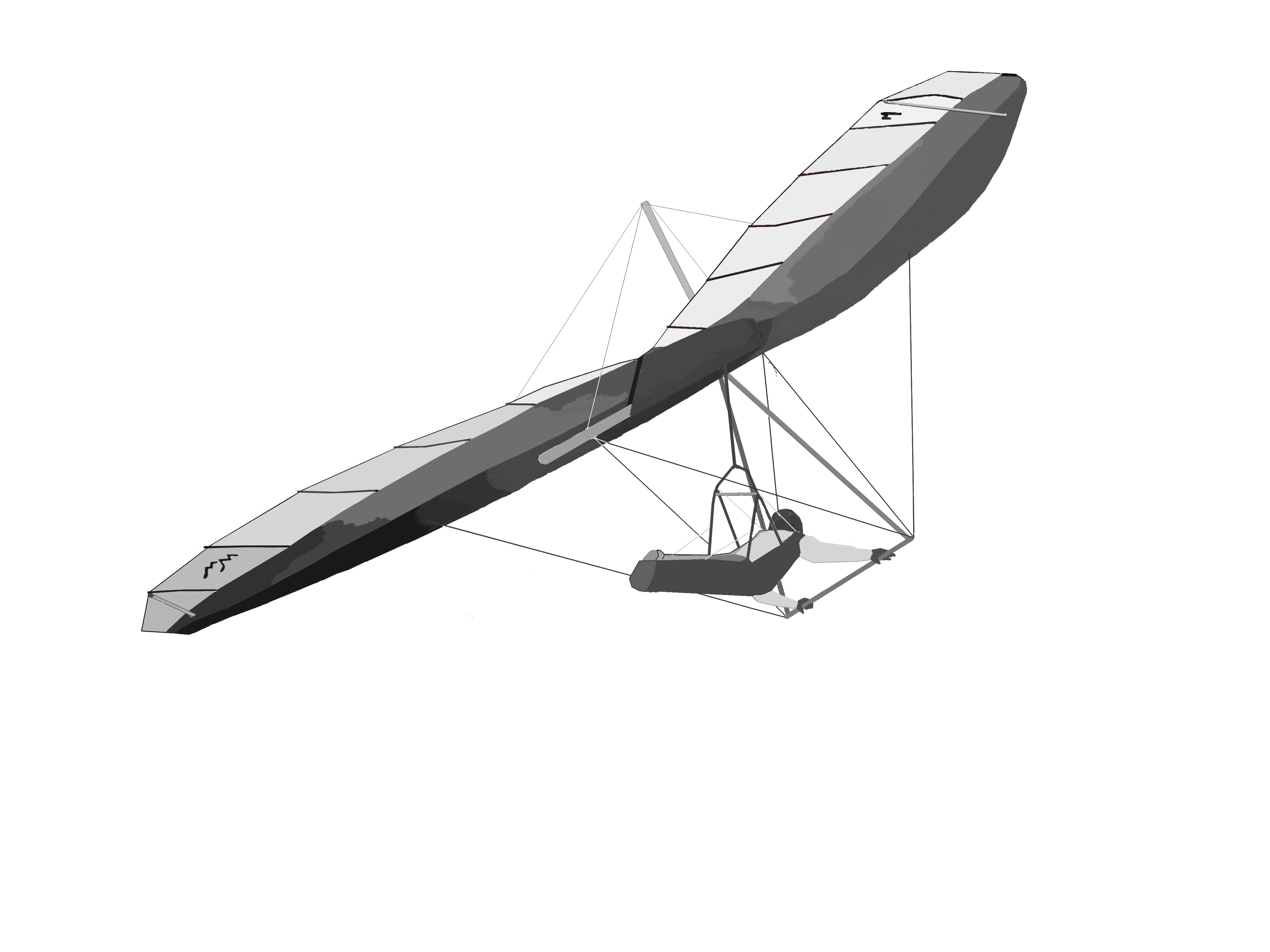
The Raptor is a rigid wing hang glider kit manufactured by Bailet’s Composites. The Raptor is a swept flying wing with tip rudders and was designed by Matt Kollman of Columbus, Ohio. Matt and Roy Bailets worked together on the Genesis sailplane where they met Jim Marske. Jim supplied the airfoil and ideas for the structure which Matt turned into the Raptor design. Roy Bailets was developing the tooling for kit production in Mojave, CA. The Raptor production prototype should have been flying the summer of 1997. Matt Bailets had been flying the prototype for about 3 years and had more than 70 hours flight time. Lightly swept flying wing. Span 12.34m, area 14.86m², AR 10.5, glide 18:1, weight 41kg. Marske Monarch airfoil. Kits built at ~1 per 3 months.
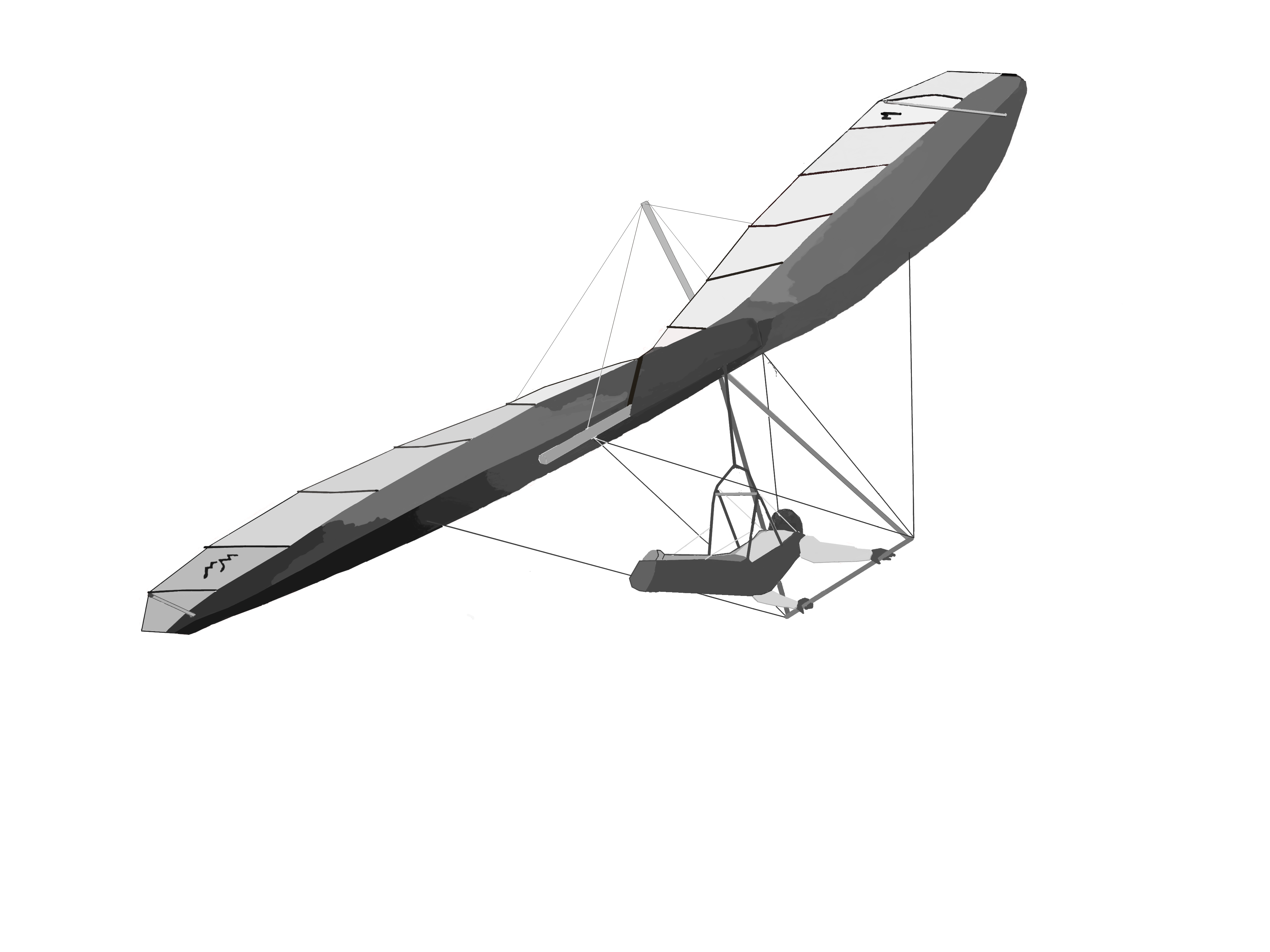 Olaf Barthodzie1 glider
Olaf Barthodzie1 glider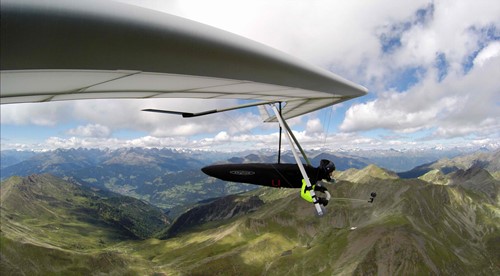
Span 13.85m, area 13m², AR 14.75, weight 42kg, glide ~20. Winglets 0.9m. Packing length 7.2m.
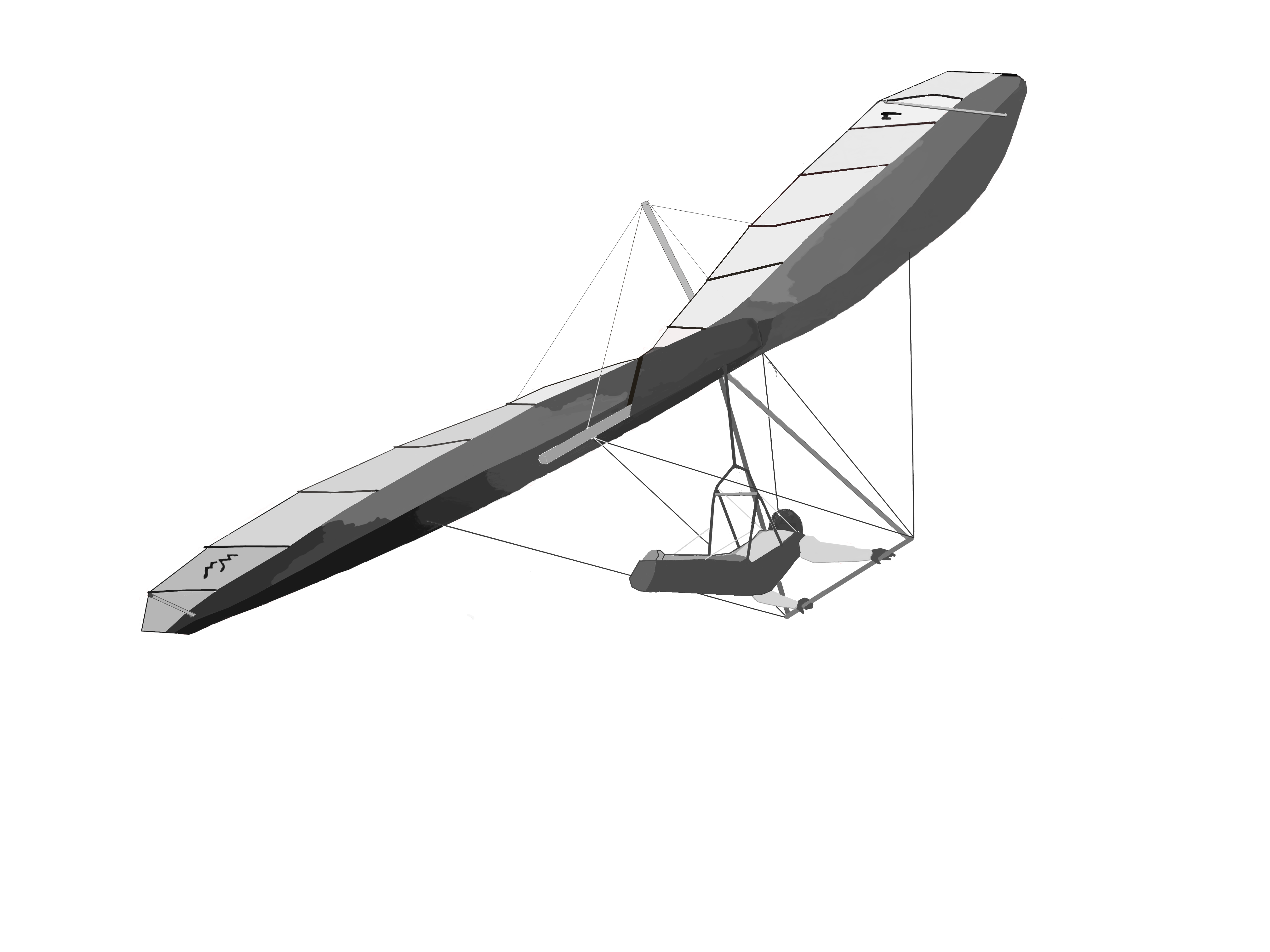 Seedwings1 glider
Seedwings1 glider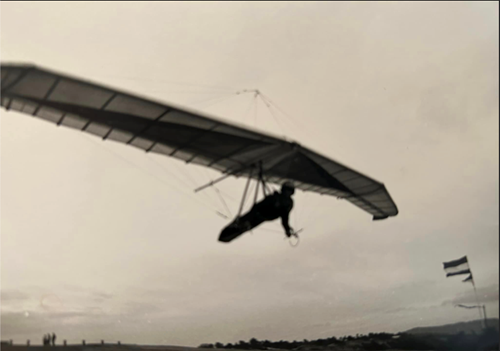
Seagull wing with dihedral inboard and anhedral outboard. Plans sold for $50. Builder later founded Seedwings.
 Taras Kiceniuk2 gliders
Taras Kiceniuk2 gliders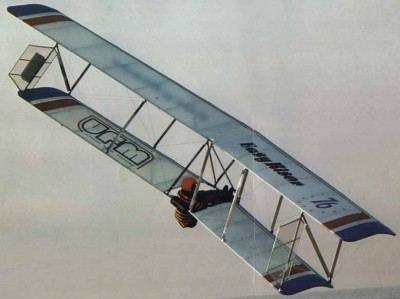
he Easy Riser biplane was designed by Larry Mauro and which under the name Icarus II was one of the earliest hang gliders to be motorised, back in 1975 by John Moody. A rigid wing tailless biplane flown by supplemental weight-shift. A variety of engines could be fitted, including the 125cc McCulloch 101 go cart engine, UFM selling the machine as a hang-glider. Control method: Standard tip rudder and weight-shift pitch axis, optional 2 or 3 axis control. First year built 1976. Units delivered by June 1981 2,500. Many options in power and landing gear were available. It is strut and cable braced.
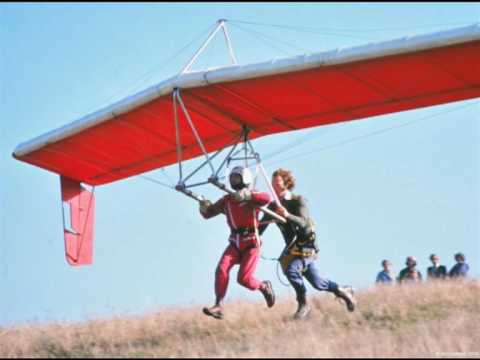
The Icarus V is a significant advancement in hang gliding technology, known for its innovative design and performance. Here are some key features of the Icarus V: Design: The Icarus V is a swept, constant-chord, flying-wing monoplane with a 32-foot span and 5-foot chord. It features a wing area of 160 sq. ft., giving an aspect ratio of 6.4. The construction is of aluminum tubing, cable (3/32") braced, and covered with fabric. 1 Performance: The Icarus V has an empty weight of 65 lb and a glide ratio of around 10:1, making it suitable for cross-country flying and tight landing situations. It can be flown at speeds of up to 45 mi/h when nosed down and 16 mi/h with sinking speeds around 1 m/s (180 ft/min). 1 Control: The control system for the Icarus V includes pitch control by body weight shift on parallel bars and lateral control through individually controlled tip rudders. This design ensures strong roll response and pitch stability. 1 Historical Significance: The Icarus V was one of eight ultralight aircraft displayed at the Experimental Aircraft Association's Tribute to Ultralight Pioneers exhibit at their AirVenture Museum in Oshkosh, Wisconsin, in 2005. 1 The Icarus V's design and performance have made it a precursor to modern rigid wing hang gliders, setting a new standard in the field of hang gliding. Its design and construction have been recognized and celebrated by enthusiasts and professionals alike.