Vote for future
Rigid Wings add-ons.
These gliders are under research consideration for future THGF packages. Cast your vote to signal demand — grouped by manufacturer, ordered by votes.
Sign in to vote · one vote per glider per account
 Aériane2 gliders
Aériane2 gliders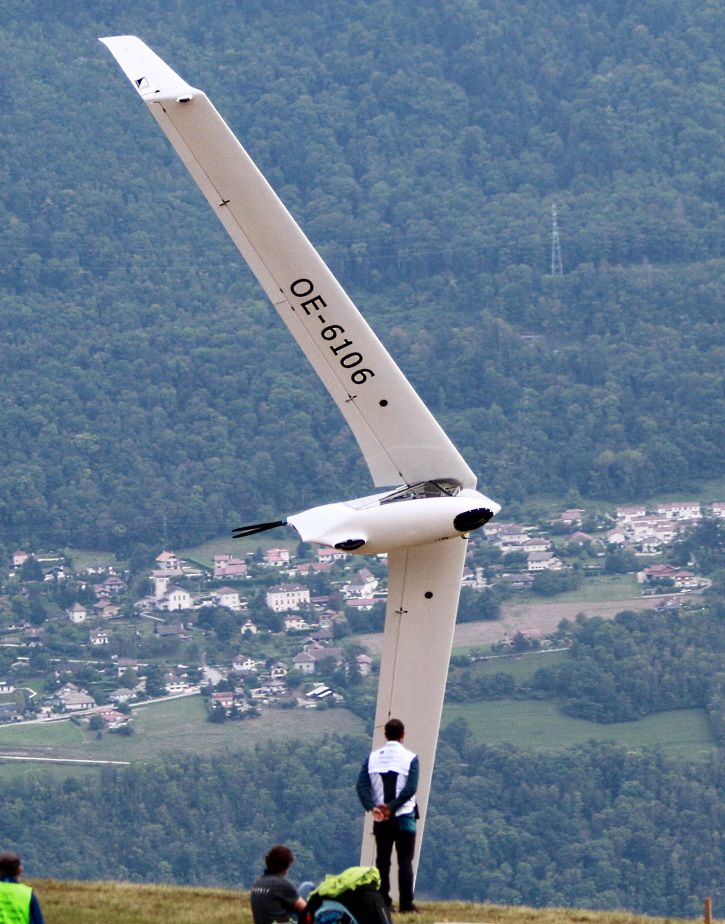
The new Swift 3 is the result of 4 years of development. It’s a major evolution of the Swift’Light, with all-new aerodynamics. The result: 25% more efficient and improved in every aspects. 2 versions: Foot-launchable, without motor, or Self-lauchable, with an electric motor The foot-launched version can also be launched by winch, tow or even by bungee. The motorized version uses a Geiger Aviation electric motor, with an 2-blades foldable propeller. The electric motor allows for taxiing and taking off in complete autonomy. Same wings – 2 different fuselages.
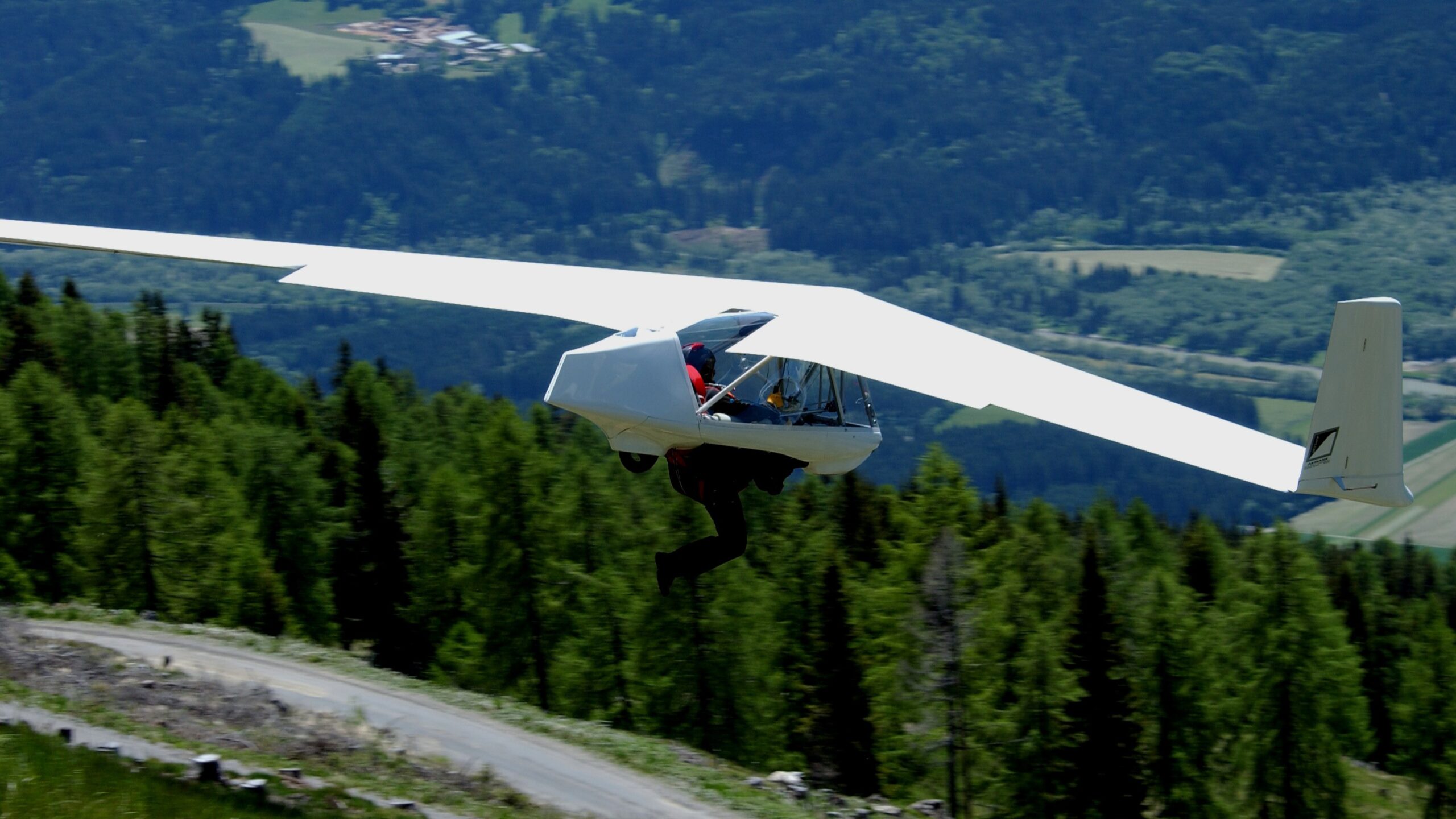
Production of the Swift’Light began in 2002. It represents a significant evolution of the standard Swift. The main improvements are: – A new manufacturing technology has reduced the weight of the wings by 20%. – While the wings are manufactured in the same molds as the standard Swift’s wings, the geometry has been modified by tilting the winglets. This increases the wingspan. The winglets angle of attack has been optimized. – The winglets are equipped with control surfaces occupying 40% of their surface area. The rudder pedals can operate the rudders separately to control yaw, but also simultaneously, acting as airbrakes. – Airbrakes are available as an option. In practice, the majority of Swift’Light have been delivered with them. – Improved fuselage with new, more rigid folding frame, better pilot position with optimized field of view. The Swift’Light was produced until 2022. It was then replaced by the Swift 3.
 Bright Star2 gliders
Bright Star2 gliders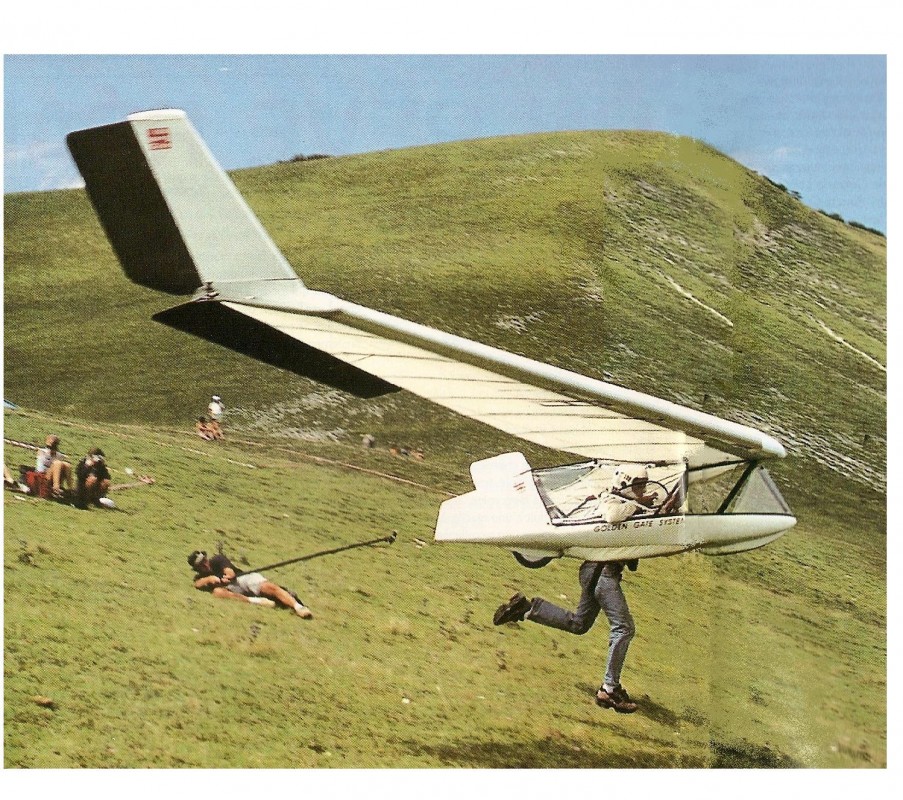
Prototype New Millennium evolution. Span 39ft, smaller repositioned cage. Performance close to Swift when faired. Prototype only.
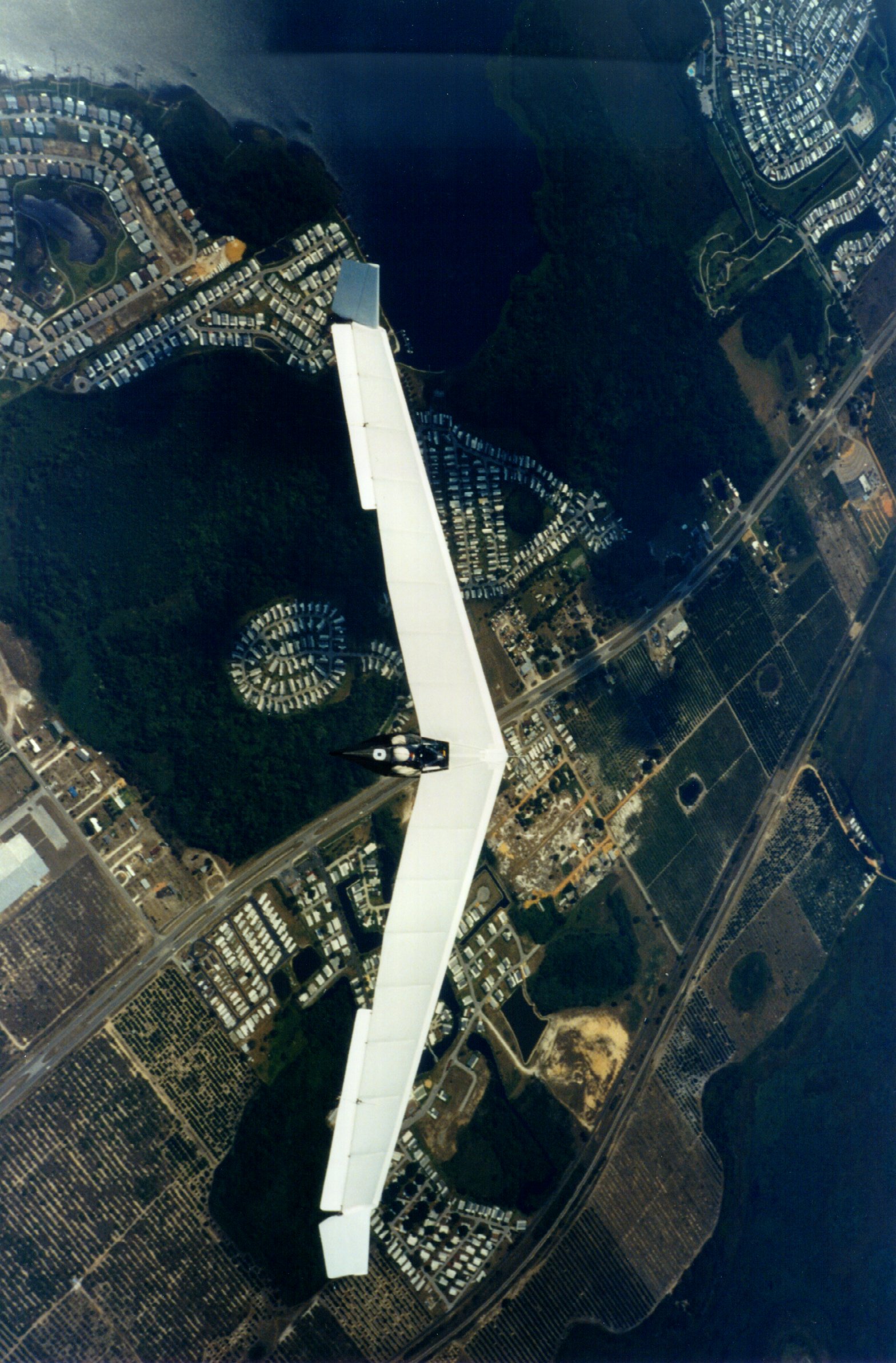
Successor to Millennium. Retractable variable-area flaps (36 sq ft adjustable). Span 12.7m, area 10.52–13.84m² (flaps retracted/extended), weight 45kg. Projected glide >20:1.
Don Mitchell1 glider
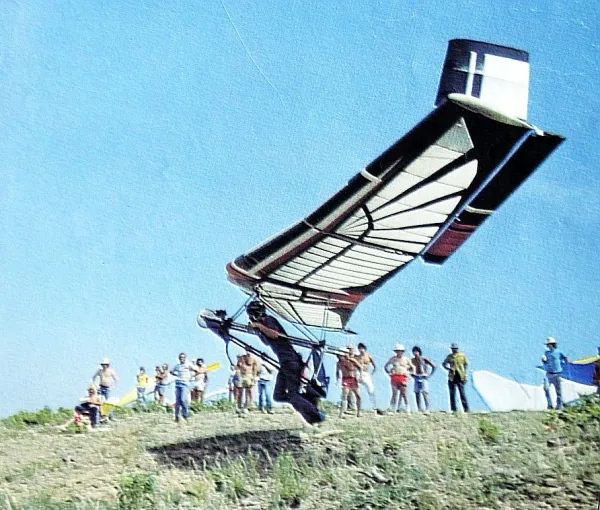
It was back in the early 1940's that Don Mitchell first became involved with flying wing glider design and construction. But WWII interrupted his research and experiments. The War's specific needs for large payload capacity and space ruled out the flying wing design and Mitchell's vision lost its place in aviation history. Then in 1974, with the advent of hang glider mania, the Mitchell Wing resurfaced. It was at that time Dr. Howard Long took an interest in the half-forgotten project and asked Mitchell to make him a flying wing hang glider. The result was the foot-launched Mitchell Wing and it astounded the world of hang gliding.
 Günther Rochelt1 glider
Günther Rochelt1 glider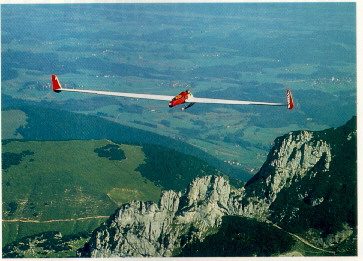
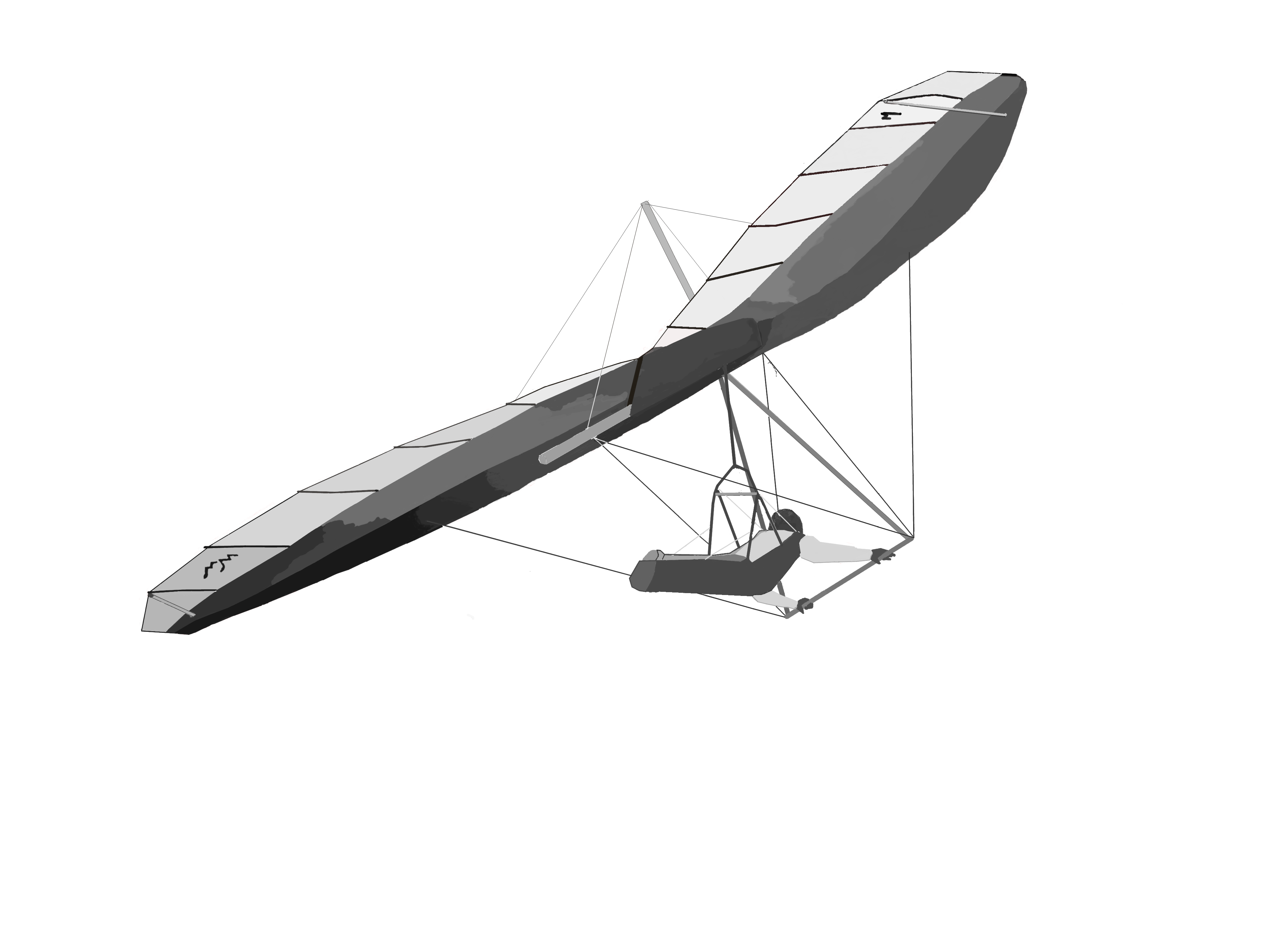
Successor to Flair 18. Span 12m, area 11m², AR 14, glide 30:1, elevons with 0–60° flaps. Prototype destroyed in crash after 50+ test hours.
 Ruppert Composite1 glider
Ruppert Composite1 glider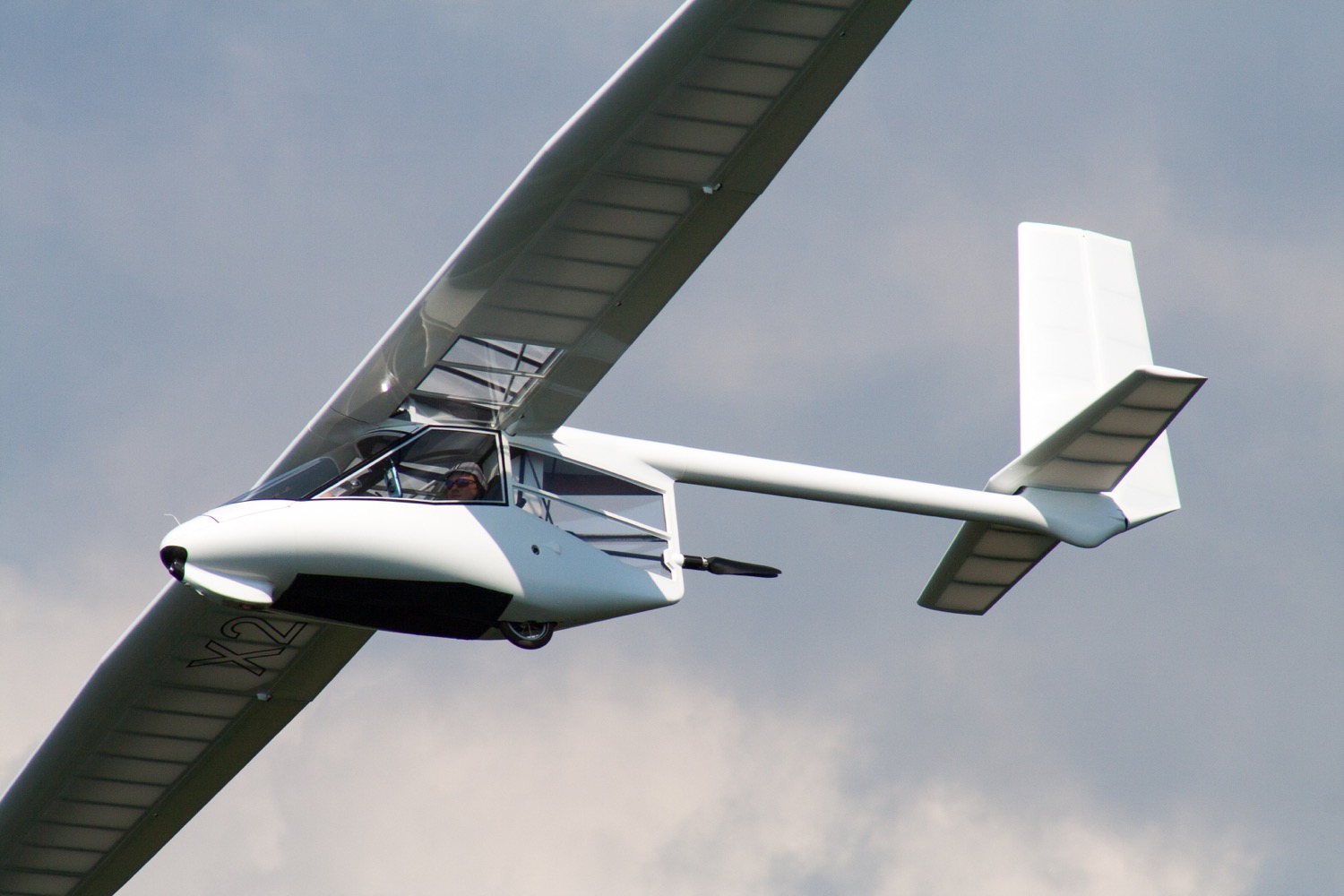
Stick-and-pedal three-axis foot-launchable ultralight glider. Flap/airbrake, retractable undercarriage, stall-resistant. Max glide ~27:1 at 55km/h. FAI Class O-2.
 UP1 glider
UP1 glider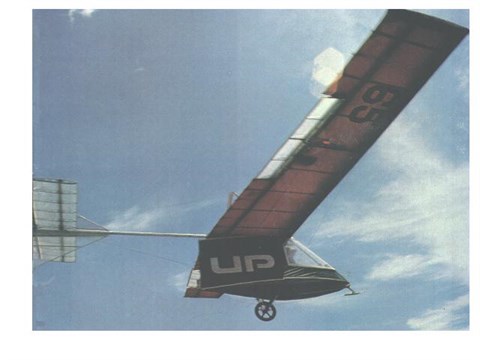
The Arrow was a three-axis foot-launchable ultralight sailplane designed in 1982 by Ultralight Products, a hang glider manufacturer in Temecula, California, also the designer of the famous UP Comet hang glider. While a technically interesting development, it was not a commercial success, being a few years ahead of its time. It seems that the general hang glider population of the time saw the inconvenience of the weight and setup hassles as more than offsetting the performance advantages. The Arrow took 4th place at the 1982 Owens Valley Cross Country Classic piloted by Eric Raymond. At this meet, the glider was allowed to completed with other flex wings, and showed a large performance advantage. However, Eric did not win the meet because of a tactical error on one day (though he won three other days). In June, 1985, Peter Brock, president of UP, said in an interview for 'Hang Gliding' magazine: "We put a lot of time into developing the Arrow, and it performed real well, but there are a couple of reasons we have not put it into production. First of all, its setup time is over an hour --. it's not a glider to fly unless you're planning a major XC event It also proved to be difficult to foot-launch. It became obvious that the only way to get it up was to tow it which wasn't legal until October 1984. The FAA just suddenly decided it was going to be legal so now we have a product with a tremendous amount of potential."
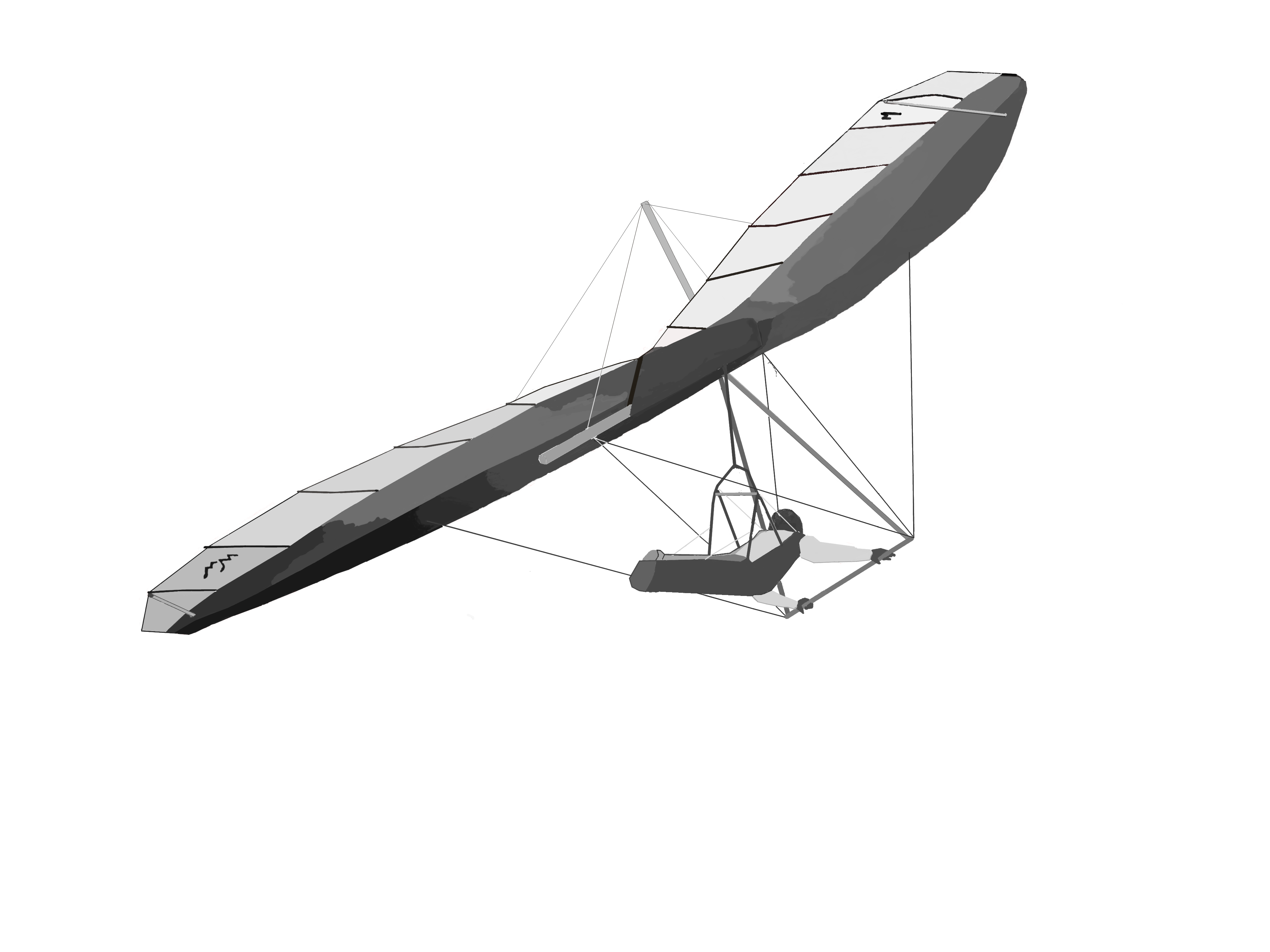 Volmer Aircraft1 glider
Volmer Aircraft1 glider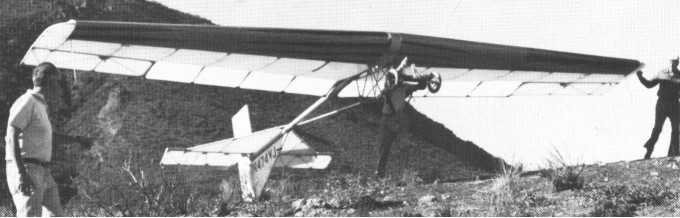
Designed by Volmer Jensen and Irv Culver, its cost Jensen roughly $400 in supply in 1971. The total construction time is estimated at three months of construction in free time. Culver is an aerodynamic engineer who designed the profile of the VJ 23 SwingWing and made the fatigue study. Volmer VJ-23 Swingwing Article The cantilever wing has a relative thickness of 16%, thus eliminating the reinforcement by cables or struts. The disassembled craft is designed to be assembled in 30 minutes. The cantilever wing is largely built from spruce and plywood with a fabric covering. The wing is constructed in two parts of 4.88 meters and able to be assembled with three bolts. The wings, which weigh 15 kilos each, with a limit load factor of 2G and an ultimate load factor of 3G. The leading edge of the wing is made with a 1mm backing, and the leading edge ribs are 1cm thick marine plywood, with spruce for the ribs of the tail unit, and rods for the spar of the wing. Jensen does not use epoxy for the VJ23, preferring white glue that he has been trusted for years. The wings and tails are covered with Ceconite, a light fabric of 1.8oz / sqrd. The tail boom is an aluminum tube of diameter 10 cm and 4m long. Apply the fabric without stretching it, then apply a coating to ensure waterproofing. The fabric can then be stretched with an iron. The VJ-23 features padded arm rests and wheels. It is controlled by a joystick. The kit came with an airspeed indicator.
 XXtherm1 glider
XXtherm1 glider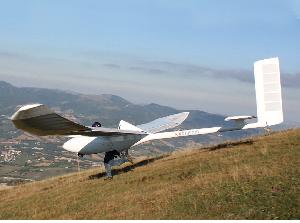
Swiss all-carbon composite competition rigid hang glider. Forward-swept inner wing, swept-back outer sections. Built using patented BFM bifunctional flexible molds (thin laminates as both mold and structure). Wings split into 3 segments, 4.8m transport. Glide ratio >35:1 claimed.